
Best Carpet for Offices in Dubai: Tiles vs Broadloom vs Vinyl
Choosing the best carpet for offices in Dubai is not just about looks. Your flooring has to handle heavy foot traffic, rolling chairs, dust and constantly running AC, while still giving your team a quiet, professional space to work in. The three most common options are carpet tiles, wall-to-wall broadloom and vinyl, and each suits a different type of office. The wrong choice can mean costly repairs, visible wear or a noisy workspace within a year or two. This guide compares all three so you can pick the right one for your space, budget and layout.
Quick Answer: Which Office Carpet Should You Choose?
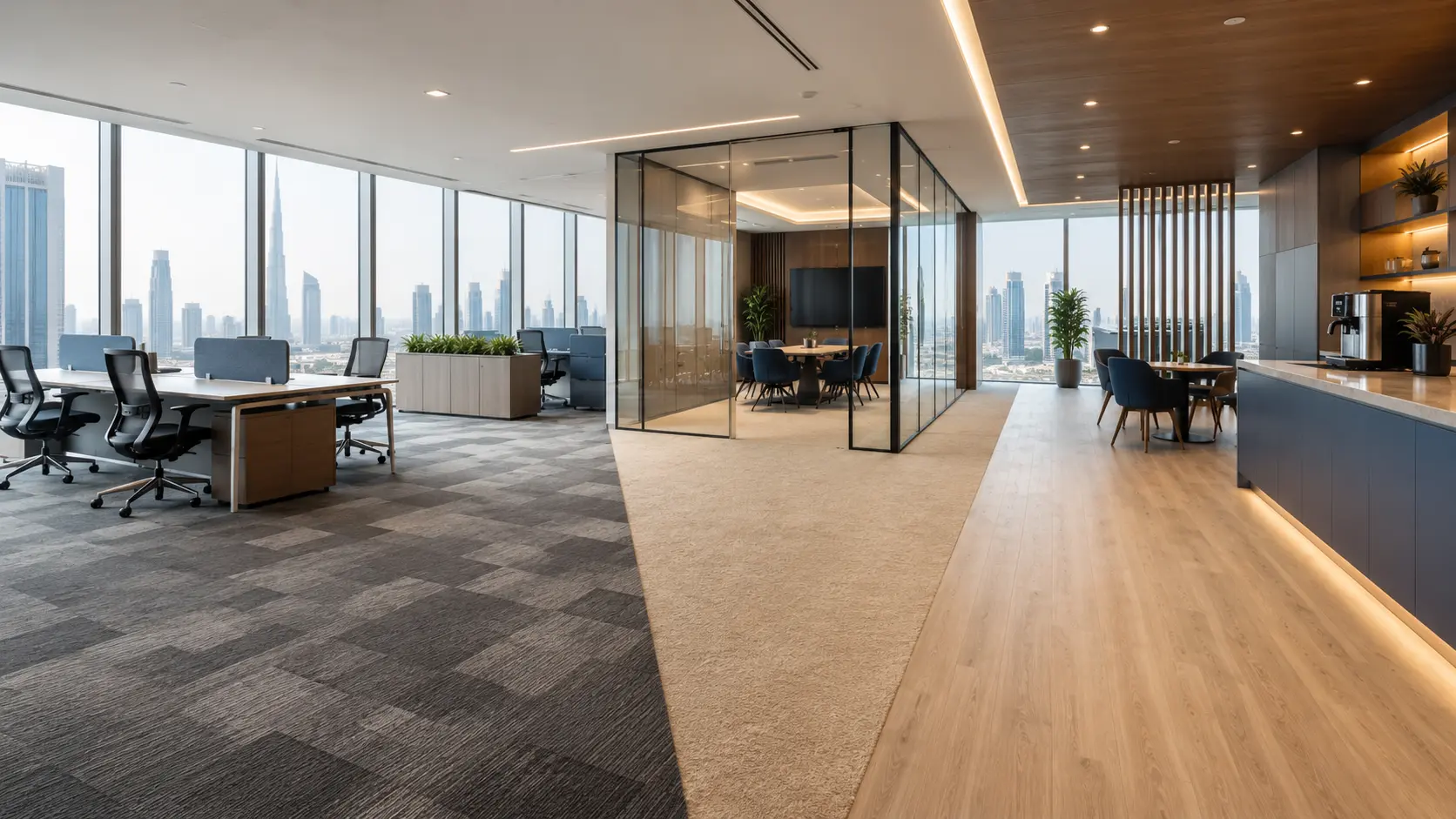
For most Dubai offices, carpet tiles are the safest choice. They handle heavy traffic well, install quickly, and let you replace a single stained or worn tile instead of redoing the whole floor. Wall-to-wall broadloom carpet works best for executive offices, boardrooms and quiet areas, where its seamless look and sound-absorbing comfort matter most. Vinyl is the practical pick for pantries, entrances and temporary or exhibition setups, where water resistance and easy cleaning come first. If your office has several zones, it often makes sense to combine two of these options instead of using one type everywhere.
What to Look for in an Office Carpet in Dubai
The right office carpet depends on how your space is actually used, not just how it looks. Before comparing tiles, broadloom and vinyl, check six practical factors: foot traffic, chairs, noise, climate, safety and total cost. Getting these right at the start helps you avoid early wear, noisy floors and unexpected replacement costs.
1. Foot traffic and durability rating
Offices see constant foot traffic, especially in entrances, corridors and open-plan work areas. Look for carpets rated for commercial use, with dense fibers that bounce back after repeated walking. Ask your supplier for the durability or traffic rating of each product instead of judging by appearance. A carpet that suits a quiet executive office may wear out quickly in a busy reception or hallway.
2. Rolling chair compatibility
Office chairs put steady pressure on the same patches of flooring, which can crush soft or deep-pile carpet over time. Low, dense or loop-pile constructions handle castor wheels much better and let chairs move smoothly. Thick, plush carpets make chairs harder to roll and show wear faster around desks. If you prefer a softer carpet in some rooms, chair mats can protect the high-use spots.
3. Acoustics in open-plan offices
Open-plan layouts reflect sound off hard surfaces, so footsteps, phone calls and conversations quickly build into background noise. Carpet absorbs sound, which makes the workspace calmer and helps staff concentrate. Thicker carpets with underlay generally absorb more noise than thin ones, while hard vinyl does very little. If your team takes frequent calls or holds meetings in open areas, treat acoustics as a priority and not an afterthought.
4. Dust, humidity and AC conditions
Dubai offices combine outdoor dust, strong air-conditioning and seasonal humidity, all of which affect how a carpet looks and lasts. Choose fibers and backings that resist moisture, hold up to regular vacuuming and don’t trap dirt deeply. Darker or patterned finishes also hide everyday dust better than plain light colors. Good ventilation and routine cleaning matter just as much as the product you choose.
5. Fire safety and compliance
Fire safety rules for building materials in Dubai are taken seriously. Dubai Civil Defence has said that materials and products used in construction must be tested at its Emirates Safety Lab, which issues safety certificates to suppliers. I couldn’t find a published requirement that names carpet specifically, so ask your supplier for fire-test documentation for the product you’re considering. Also confirm the exact requirements for your building with your fit-out consultant, landlord or Dubai Civil Defence before you order.
arcpublishing
6. Budget, including installation and lifetime cost
The lowest price per square meter rarely gives you the lowest cost over time. Add installation, subfloor preparation, removal of old flooring, cleaning and the cost of replacing worn sections. Carpet tiles, for example, let you swap a damaged piece, while broadloom may need a larger repair. Comparing the total cost over several years gives you a much clearer picture than comparing prices on day one.
Carpet Tiles for Offices
Carpet tiles are square, modular carpet pieces, usually installed with adhesive or interlocking backing, which makes installation fast and causes little disruption to a working office. Their biggest advantage is flexibility: if one tile gets stained or worn, you replace just that piece instead of the whole floor, which saves money and reduces waste. They also make it easy to access floor cables and service points, and they come in many colors, textures and patterns for zoning open-plan spaces or matching brand colors. On the downside, seams can be visible in some layouts, and certain premium ranges cost more per square meter than basic broadloom. Carpet tiles work best in open-plan offices, corridors, co-working spaces and rented premises where layouts change often. Our Factory Carpet Tiles start from AED 49, and Prima Gradual starts from AED 60.
Wall-to-Wall (Broadloom) Carpet for Offices
Wall-to-wall carpet, also called broadloom, is carpet supplied in wide rolls and fitted across the whole floor from one wall to the other, usually over an underlay. This creates a seamless, polished look that suits executive offices, boardrooms and large open floors where appearance matters. It also absorbs sound well and feels comfortable underfoot, which helps keep meeting rooms and private offices quiet. The main drawbacks are that repairs are harder, since a badly damaged section may need patching or recutting, and irregular layouts create more offcuts and waste. Installation also takes longer and is more disruptive than fitting tiles, so it needs planning around working hours. It is best for premium, low-to-medium traffic areas where a quiet, uniform finish is the priority.
Vinyl Carpet and Vinyl Flooring for Offices
“Vinyl” in offices usually means one of two things: vinyl carpet, a PVC-based floor covering with a carpet-like surface, or vinyl flooring such as luxury vinyl tiles (LVT) and vinyl sheets, which have a hard, smooth finish. Both are water-resistant, stain-resistant and very easy to clean with a quick mop or wipe-down, which makes them practical wherever spills and dirt are common. They are also usually more affordable than premium carpet, and many types can be laid quickly for short-term or temporary setups. The trade-off is comfort and sound: vinyl absorbs far less noise than carpet tiles or broadloom, feels harder underfoot and can look less premium in executive areas. Because of this, vinyl works best in pantries, entrances, storage rooms and other high-spill zones, as well as exhibition and event spaces that need fast, low-cost flooring. For the main work areas, most offices pair it with carpet instead of using it everywhere. Browse our vinyl carpet range to see what suits your space.
Carpet Tiles vs Broadloom vs Vinyl: Side-by-Side Comparison
Each option wins in a different area, so the best choice depends on what matters most in your office. Carpet tiles lead on flexibility and repairs, since you can replace a single damaged tile and reach floor cables easily. Broadloom leads on appearance and comfort, offering a seamless, premium finish and the strongest sound absorption of the three. Vinyl leads on water resistance and easy cleaning, which suits spill-prone and temporary spaces. On installation, tiles and vinyl are generally quicker and less disruptive than broadloom, which needs more planning around working hours. On cost, always compare the total over several years, including installation and replacements, instead of the price per square meter alone. The table below compares all three across the factors that matter most to Dubai offices.[/vc_column_text]
| Factor | Carpet Tiles | Broadloom (Wall-to-Wall) | Vinyl |
|---|---|---|---|
| Price per sqm (AED) | From AED 49 | AED 40 to AED 245 | AED 73 to AED 85 |
| Installation speed | Fast, with little disruption | Slower, needs planning around working hours | Fast, especially for temporary setups |
| Durability in high traffic | High with commercial-grade ranges | Good in low-to-medium traffic areas | High, resists wear and moisture |
| Maintenance | Vacuum regularly, spot-clean or swap tiles | Vacuum regularly, periodic deep cleaning | Easiest: sweep and mop |
| Acoustics (noise reduction) | Very good | Best of the three | Weakest |
| Comfort underfoot | Good | Best, especially with underlay | Hard, least comfortable |
| Repairs and replacement | Easy, replace single tiles | Harder, patching or recutting needed | Depends on type; sections or sheets may need replacing |
| Access to floor cables | Easy, lift tiles | Difficult | Depends on installation |
| Appearance | Modular, many colors and patterns; seams may show | Seamless, premium look | Wood-look and herringbone designs, less plush |
| Water and stain resistance | Moderate, depends on backing | Moderate, depends on fiber | Excellent, waterproof |
| Best for | Open-plan offices, corridors, co-working spaces, rentals | Executive offices, boardrooms, large quiet floors | Pantries, entrances, storage, reception areas |
Best Carpet by Office Area in Dubai
Different parts of an office need different flooring, so the best approach is usually to match the carpet to how each area is used. Open-plan workspaces and corridors suit carpet tiles, which handle constant traffic and are easy to replace. Executive offices and boardrooms work well with wall-to-wall carpet for its seamless look and sound absorption. Reception areas and entrances need a durable, easy-to-clean surface, so tiles or vinyl are practical choices. Meeting rooms benefit from soft carpet to reduce echo, while pantries and break rooms are better with waterproof vinyl. For staircases, choose a stair carpet with good grip and strong wear resistance.
Design and Color Tips for Offices
The right carpet design can shape how your office looks and feels, so think about your brand and how people use the space. Neutral shades such as grey and beige give a clean, professional look that suits most offices and matches any furniture. Darker or patterned finishes hide dust and everyday wear better than plain light colors, which helps in high-traffic zones. Brighter accents like blue can add energy to collaboration areas without overwhelming the room. Carpet tiles also let you mix colors or patterns to mark out different zones in an open-plan layout. Keep the palette consistent with your walls, lighting and furniture so the space feels connected.
Cost of Office Carpeting in Dubai
The total cost depends on the type of flooring, the size of the area and how much preparation the floor needs. On our site, carpet tiles start from AED 49 per sqm, wall-to-wall carpets range from AED 40 to AED 245 per sqm, and vinyl ranges from AED 73 to AED 85. These are current sale prices and can change, so confirm them before ordering. Beyond the material, budget for installation, underlay, subfloor preparation and removal of old flooring. Comparing the cost over several years, including repairs and replacements, gives a more accurate picture than the price per sqm alone. For a firm figure, request our free measurement and quote for your space.
Installation, Cleaning and Maintenance
Proper installation has a big effect on how long an office carpet lasts, so it’s worth using experienced fitters. Our team handles measuring, subfloor treatment, underlay and fitting, and can also remove old flooring before the new carpet goes in. Tiles and vinyl are quicker to install, while broadloom takes longer and needs careful stretching for a wrinkle-free finish. After installation, vacuum high-traffic areas regularly and blot spills right away instead of rubbing them. Schedule a professional deep clean about once a year to keep the carpet fresh.
Conclusion
The best carpet for your Dubai office depends on how each area is used, how much traffic it gets and what your budget allows. Carpet tiles are the most flexible choice for busy, open-plan spaces, broadloom suits quieter and more premium rooms, and vinyl works well where spills and moisture are likely. Many offices get the best results by combining two options instead of using one throughout. Compare the total cost over time, not only the price per sqm, and choose products that suit your layout and brand. To get started, explore our collection of office carpets Dubai or book a free site visit and we’ll help you choose.
Frequently Asked Questions
1. Which carpet is best for a high-traffic office in Dubai?
Carpet tiles are usually the best choice for high-traffic offices. Commercial-grade tiles handle constant foot traffic and rolling chairs, and a worn or stained tile can be replaced without redoing the whole floor. For entrances and reception areas, durable tiles or easy-to-clean vinyl also work well.
2. Are carpet tiles better than broadloom for offices?
For most offices, yes, because tiles are easier to install, repair and adapt when the layout changes. They also give easy access to floor cables. Broadloom (wall-to-wall carpet) is the better pick for executive offices and boardrooms, where a seamless look and stronger sound absorption matter more than flexibility.
3. Is vinyl a good flooring option for offices?
Vinyl works well in areas where spills and moisture are likely, such as pantries, break rooms and entrances. It is waterproof and very easy to clean. However, it absorbs less sound and feels harder underfoot than carpet, so many offices use it alongside carpet instead of everywhere.
4. Is carpet suitable for Dubai’s climate and constant air conditioning?
Yes. Carpet covers the floor fully and helps insulate it, which can keep rooms comfortable under constant AC. It also traps dust instead of letting it circulate, and regular vacuuming removes it. Dense, easy-to-clean fibers and darker or patterned finishes are the most practical choices where dust is a concern.
5. What does office carpet installation usually include?
A professional installation typically covers measuring the space, treating subfloor imperfections, fitting underlay and laying the carpet. Removal and disposal of old flooring is often part of the service as well. Tiles and vinyl generally install faster than broadloom, which needs careful stretching for a wrinkle-free finish.